International communications veteran Jorge Ortega joins ChangeMakers USA as Executive Vice President, Client Success
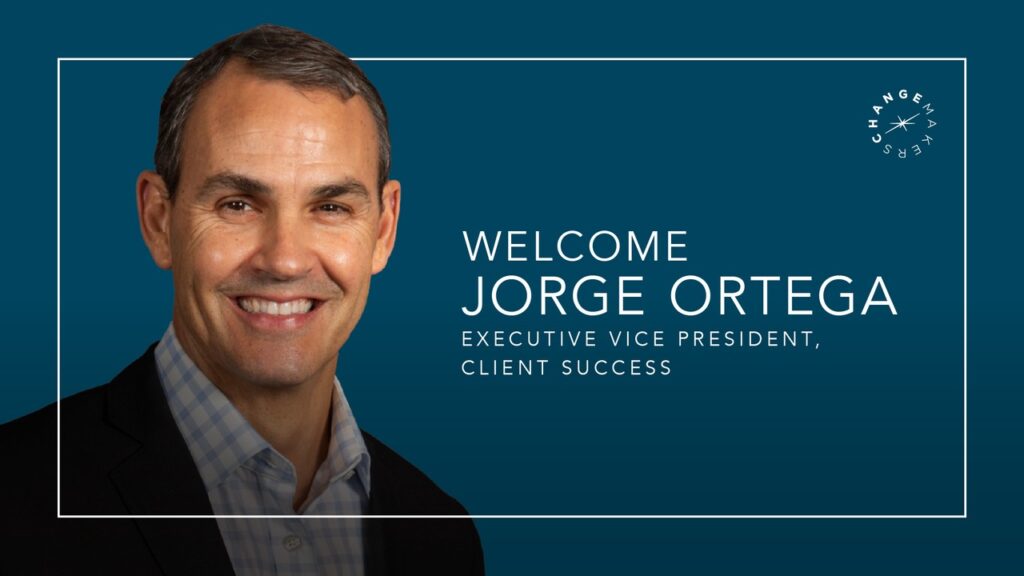
WASHINGTON, D.C. (April 10, 2025) — ChangeMakers, a leading North American communications and marketing firm focused on reputation and social impact, has appointed Jorge Ortega as Executive Vice President, Client Success and a member of the firm’s U.S. leadership team.
A former senior leader at two multinational agencies, Ortega brings decades of experience advising public and private sector clients on CEO communications, leadership development, brand strategy, and crisis response. He will report to Robert Gemmill, President of ChangeMakers, USA.
“Jorge is a major addition to the ChangeMakers team,” Gemmill said. “The trust he has earned from C-suite executives is evident by his deep relationships and broad experience across sectors. His leadership will be key as we grow our U.S. business and deliver the results our partners expect.”
Ortega joins ChangeMakers from CRA | Admired Leadership, where he served as Managing Director. He previously led Edelman’s southwest region and held senior roles at Burson. His career spans reputation strategy, brand communications, and high-stakes crisis response.
“Jorge’s appointment reflects our commitment to building a leadership team with both insight and impact,” said Mario Simon, CEO of ChangeMakers. “His integrity and experience align with our mission to navigate complexity for our clients.”
Ortega joins the ChangeMakers U.S. team, which specializes in helping clients anticipate and navigate complex, high-stakes communication situations. The firm uses its proprietary Reputation Score© AI platform to inform counsel and to measure and predict reputational impact in real time.
“I’m eager to bring my experience advising global clients to help ChangeMakers grow and deliver meaningful results,” Ortega said.
About ChangeMakers
For more than 40 years, ChangeMakers has helped organizations solve complex communications challenges by blending strategy, creativity, and insight. With more than 400 professionals across 10 locations in North America, we partner with clients to build stronger brands, navigate change, and drive meaningful impact. From corporate reputation and brand storytelling to social purpose and executive advisory, ChangeMakers brings together diverse expertise to help clients lead with confidence and clarity.
Major projects run on public confidence, not just public funding

Published: Calgary Herald April 7, 2026
Canada is entering a defining era of federal major projects that will shape our economy and our global competitiveness for decades. Prime Minister Mark Carney’s major project announcements signal an ambition to accelerate nation-building infrastructure.
The opportunity is as enormous as the responsibility. These projects will not succeed on capital alone. They will succeed only if citizens are meaningfully engaged in the decisions that determine what gets built, where, and how.
Too often public engagement is treated like a box to tick after the route is picked, the budget is set, and the press release is drafted. That approach is outdated and expensive. It slows shovels, inflames conflict, ignores Indigenous Title and Rights and turns significant projects into symbols of mistrust.
There’s a misconception that engagement slows things down. Major projects operate at the speed of trust. Done early, it recognizes rights, helps surface concerns, hopes and opportunities before they harden into opposition.
Consider the projects that dominate the Canadian imagination and investor spreadsheets. LNG in B.C. is framed as an export opportunity and geopolitical tool, particularly as allies seek reliable energy supply. High-speed rail, new transmission, nuclear projects, and carbon capture are pitched as the infrastructure of productivity and resilience. These projects can face community opposition as they touch identity, jurisdiction, and intergenerational risk.
Early and thoughtful public engagement can be the difference between lasting trust and mere compliance. Compliance is brittle and can be obtained by rushing a timeline or narrowing a comment period. Consent stands the test of time. It is earned through co-development and co-design with rights holders and through early conversations that shape decisions. When engagement happens early, it reveals local knowledge that improves design, reduces environmental risk, and prevents avoidable cost overruns. When it happens downstream, it becomes a referendum on trust.
We do not have to speculate about what happens when governments get ahead of their public. Ontario recently floated the idea of changing month-to-month “evergreen” leases, triggering swift backlash from tenants and housing advocates. Within days, the Province called off the proposed consultations. That is what a hurried signal looks like in the real world: confusion first, outrage second, retreat third. The policy may not be a megaproject but the lesson is relatable. Decisions that land as surprises invite opposition that becomes a schedule, cost, and reputation problem.
Now raise the stakes to a proposed major project within Indigenous territories. Here, engagement is not only best practice but a constitutional reality. Nations are rights holders with their own governments, laws, and priorities. Projects that treat Indigenous engagement as a risk-mitigation tactic miss the biggest opportunity on the table: shared decision making and prosperity built through equity participation, procurement pathways, training pipelines, and stewardship models that reflect Indigenous knowledge and authority. Done well, this is reconciliation you can measure: jobs created, revenues shared, language and culture supported, and ecological outcomes strengthened.
From racialized Canadians to newcomers to people with disabilities, low-income communities, and beyond, engagement insights can reveal practical barriers and unintended consequences of a project.
Carney’s bold agenda matched by billions in investments presents an opportunity. Canada can build fast and engage meaningfully at the same time.
The International Association for Public Participation is refining its global guidelines for public engagement. The goal is clearer, faster decision-making and projects rooted in the voices of the people most affected.
Engage early. Agree on a shared vision. Share information clearly. Put real options on the table. Fund participation so communities are not asked to volunteer their capacity. Respect Indigenous title and rights. Then communicate with humility because Canadians can tell the difference between information and persuasion.
That is how we turn major projects into collective national achievements.


ChangeMakers Names Stefan Moores as Chief Executive Officer
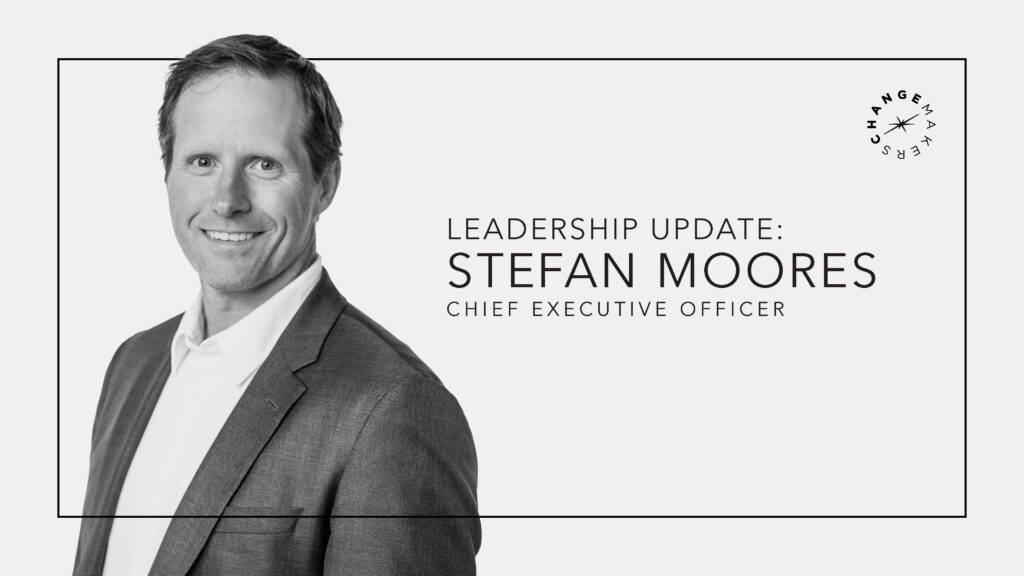
Moores’ appointment signals commitment to innovation, evolution and delivery on client outcomes
ChangeMakers, one of North America’s leading independent strategy and communications firms, announced Stefan Moores as Chief Executive Officer. The appointment reflects the firm’s ongoing evolution to an integrated, AI-native consultancy at the intersection of change, markets, and people.
“Stefan has the business acumen, entrepreneurial spirit and integrity that has earned him the trust of his team. We are energized by his leadership thus far and look forward to all that ChangeMakers will accomplish together under his guidance,” said Dale Tingley, Co-Managing Partner of the Canadian Business Growth Fund (CBGF) and Chair of the Board. “Under his leadership, ChangeMakers is well positioned to make waves in today’s evolving business market.”
“Our aspiration is simple: make ChangeMakers the most trusted partner for organizations and leaders who seek to achieve measurable business outcomes. Whether it’s tangible results like sales or revenue, or the harder to quantify cultural and reputational measures, communications is the engine that powers progress,” said Moores. “We will be on the cutting edge of AI, technology and innovation while keeping our focus on the human-centered relationships that build trust, drive results, and enhance reputation. That’s how we will deliver value every day.”
Moores’ vision for the company centers around the drive to positively impact every client’s business, from strategic planning through organizational change management and market execution. Whether navigating executive leadership changes and cultural challenges, or driving awareness and sales, ChangeMakers is the strategic partner that helps leaders execute well and move confidently.
“Whether change is the chosen path, or takes our clients by surprise, our role at ChangeMakers is to turn it into a strategic advantage,” said Moores. “We see massive opportunity in leveraging our expertise in crisis and risk management, organizational change management, public relations, marketing and social impact to change the way companies think about, execute and capitalize on change. We do that by applying all our different crafts with technology and human expertise to move with confidence.”
Moores is uniquely positioned to take ChangeMakers into the future. He brings decades of experience in business management, human resources, finance, investment and operations at leading management consulting, communications and public affairs firms across Canada and the U.S. Most recently, Moores served as Chief Operating Officer for ChangeMakers. He also previously served as President of Argyle and co-founder of The Castlemain Group. Moores holds an MBA from Stanford University Graduate School of Business, an MSC in International Politics, Economics and Business from The London School of Economics and Political Science, and a BA in Economics from Queen’s University.
“The next era of communications belongs to the doers — those who don’t ask if change can or will happen, but how to make it work. That’s the mindset we’re building at ChangeMakers,” added Moores.
ChangeMakers’ independence and cross-sector expertise allow it to deliver outcomes—not just activity—for the C-suite, senior leadership and the teams they lead. With more than 400 professionals across 10 North American offices, the firm offers end-to-end, sector-shaped solutions that help clients thrive through disruption and emerge stronger.
Resource Development: Data Speaks, but Trust Decides

We are communications and public engagement professionals, but our perspectives were shaped in forests, fields, laboratories, and community halls across Canada. What we have come to appreciate, through many projects and conversations and often the hard way, is that data, on its own, is not enough to move resource development priorities forward.
Across a combined 30+ years working in forestry, mining, fisheries, energy, agriculture, and other resource sectors, we have seen firsthand how outcomes are shaped not just by data and evidence, but by relationships. Again and again, we have found ourselves grappling with the same question: how do we build understanding, trust, and that ever-elusive social licence in increasingly complex public arenas?
Public interest in resource decision making is very high, particularly as Canada confronts the need to drive economic growth, strengthen competitiveness, and achieve long-term resource self-sufficiency. At the same time, the narratives surrounding natural resource decision making are increasingly fragmented and polarized. Information now travels faster, through more channels, and is interpreted through deeply personal lenses. Context and nuance can easily be lost, and people are as likely to trust family and friends as much as scientists, industry leaders, or their own government officials.
This is not simply a communications challenge. It reflects a shift in how trust is earned and sustained. Project proponents, decision-makers and experts need to show up differently if they want to be heard.
Information does not equal inspiration
More data alone will rarely deepen understanding or achieve broader support. People change their perspectives, and even their behaviour, when they feel personally connected to an issue. Effective engagement moves beyond transmitting data to helping people see themselves in the opportunity, the trade-offs, and the outcomes.
Intersection of knowledge systems
Western science has greatly influenced the ways in which information is framed, communicated and consumed by the general public in the natural resources sector. Western scientific approaches provide empirical and analytical frameworks, but they only represent one epistemological lens. Indigenous knowledge systems articulate complex, relational and longitudinal understandings of land that are grounded in generations of lived experience and intergenerational transmission.
Sharing teachings and insights from these knowledge systems not only fosters more balanced and holistic perspectives in the dissemination of information, but we have also witnessed how the intersection of this data actively recognizes and affirms voices, histories and ongoing contributions of Indigenous peoples.
Distinguish rights holders from interest groups
The term “stakeholder” has long functioned as a convenient catch-all for target audiences for relationship building. Today it is recognized as inadequate and antiquated. Rooted in the action of staking a claim, it carries colonial assumptions that diminish important distinctions. By acknowledging colonial harms and moving away from one-size-fits-all terminology, we can better reflect the realities of those impacted by decision-making processes.
Treating all voices as interchangeable obscures meaningful differences in rights, responsibilities, and relationships to land and resources. Through our actions, language, and intention-setting, we have seen the benefits of instead making these distinctions visible and honouring the distinct roles and responsibilities that different parties bring to the table.
While many interests deserve to be heard, Indigenous Nations are not simply another interested party. They are rights holders, with distinct rights and place-based relationships to land. Meaningful engagement and effective relationships-building begins with recognizing and acting on this distinction.
Co-creation is the most powerful social licence strategy
When people are meaningfully involved early, trust grows, even when final decisions are imperfect or contested. Co-creation goes beyond consultation or participation for its own sake. At its best, it is about identifying shared interests, surfacing local knowledge, and shaping outcomes that deliver mutual value. Across sectors, we have seen that co-created approaches reduce conflict, improve project design, and lead to decisions that are more resilient over time. While co-creation means earlier and greater investments in engagement and communications, the positive results are undeniable. When communities, rights holders, and proponents can see how their priorities are reflected in outcomes, co-creation builds the shared ownership that long-term stewardship and effective resource development require.
Engagement excellence is essential leadership practice
Resource development has always been technically complex. Increasingly, it is relationally complex as well. Leaders who communicate openly, involve communities early, and are transparent about uncertainty are better positioned to navigate emerging issues and make durable decisions.
Building and sustaining trust requires more than communication. It requires listening, learning, and a willingness to evolve. While data remains foundational to responsible resource development, long-term success depends equally on the strength of the relationships built around it and a more holistic view of the knowledge that informs the work.
Stop Surviving Change. Start Operating Within It.

There was a time when change felt episodic — a system implementation, a reorganization, a strategic shift — distinct enough that organizations could prepare, execute, stabilize, and return to normal.
That time is gone and never coming back.
Today, change is a constant and multi-dimensional. Technology evolves, markets shift, leadership turns over, regulations move, and strategic priorities adjust — often all at once. By the time one initiative begins to settle, another is already competing for attention and resources.
In this environment, performance depends on more than managing individual initiatives well. Organizations have to rethink how their people understand change, make decisions, and execute under pressure. Volatility isn’t temporary anymore. So if change is constant, your operating model also has to reflect that new reality.
Five Change Realities
Here are five truths every organization must accept:
1. Change is Unavoidable and Must Be Normalized
Change can no longer be treated as a rare occurrence that surprises the team and eventually passes. Teams need to anticipate change as part of how they operate. This means shifting the mindset from “we’re going through change” to “this is how we do business.” Leaders must not only communicate that expectation clearly and consistently – but create the environment of trust and belonging that enables people to embrace change for what it is.
Competitive advantage today depends less on executing a single change event well and more on sustaining momentum across multiple, overlapping initiatives. When teams understand that adaptation is part of the job, they stop bracing for disruption and start operating within it.
2. Change is a Team Sport
Employees should understand how change management works. Most of the reactions we see during change are predictable: resistance, fatigue, confusion, or slipping back into old habits. When people understand those patterns, they stop personalizing the disruption and start navigating it more intentionally. Instead of reacting impulsively, they can respond strategically. The more your organization understands change management fundamentals, the less disruptive change actually becomes.
3. Agility is the Ultimate Goal
Agility is a buzzword that shows up in frameworks and tools, but its real impact comes from how people think. Resilience is built when teams test assumptions, ask better questions, incorporate feedback, and adjust course when needed. In today’s environment, complete information is rarely available before action is required. Strong organizations are able to make thoughtful decisions anyway and continue moving forward without losing focus on outcomes. Agile minds adapt quickly and deliberately.
4. Leadership Alignment is Essential
People know when senior leaders are aligned, and when they are not. The moment a crack appears, employees notice, and it creates space to question, delay, or ignore the change altogether.
Leaders must agree on the direction, commit to championing the change, and reinforce it consistently as a team. If leaders send mixed signals, operate in silos, or quietly disagree, the organization will feel it immediately. Alignment isn’t a one-time conversation. It requires visible commitment and the willingness to hold one another accountable. When leadership is unified, change gains traction. When it isn’t, even strong strategies stall.
5. Failure is Not an Option
With so many priorities shifting at once, leaders can’t afford to treat change management as optional or informal. You can’t wing it with a well-written email and expect alignment to follow. Today’s environment requires an enterprise-level change structure that provides clarity, accountability, and consistency across initiatives. Leadership behavior, decision-making, incentives, and performance expectations all need to reinforce the direction of the change. When that structure is in place, execution holds and momentum builds. Without it, even strong strategies lose traction.
The Results of Getting This Right
When organizations normalize change, build change capability across the business, and reinforce adaptability through their systems, performance becomes steadier, even in volatile conditions. Resistance decreases, adoption speeds, execution holds, and initiatives deliver the value they were designed to produce. That consistency protects ROI and strengthens confidence at every level of the organization.
At ChangeMakers, we recognize that change management and agility are not separate disciplines, but integrated capabilities that determine whether strategy performs under pressure. In an environment where change is constant, organizations that build this capability don’t just manage disruption — they operate effectively within it.
The Risk That’s Invisible – Until It’s Costly

Too often, organizational change is treated like a project to be managed — rolled out through frameworks, timelines, and checklists, even when it’s labeled “agile.” What gets missed is that change isn’t just an initiative to execute; it’s a source of risk to be actively monitored. Because change is risk.
That lesson is clear in Boeing’s story. Its challenges didn’t begin with a single failure, they began with a shift.
After Boeing’s merger with McDonnell Douglas, the company gradually moved from an engineering-led culture to one driven by finance culture. Leadership drifted farther from frontline teams, internal dissent was discouraged, and critical warnings were treated as obstacles rather than signals. What looked like operational efficiency on paper quietly degraded decision quality, accountability, and trust — until the organization was forced into costly correction by crisis under public and regulatory scrutiny.
The risk wasn’t invisible because it didn’t exist; it was invisible because no one was actively looking for it.
This is how change risk most often manifests. Not as an instant crisis or failure — but as subtle strain inside the system. Before performance metrics register a decline, decisions slow, workarounds proliferate, and managers struggle to translate shifting priorities. These signals are easy to rationalize in isolation, but together, they reveal that unorganized change is negatively reshaping the system, posing innumerable risks to strategy and value.
The solution? Embedding change management within enterprise risk management.
Unlike change management, risk management is inherently adaptive. It’s a continuous, iterative process embedded in daily activities, using sprints to constantly identify, assess, and mitigate risks. It considers financial performance, legal risks, business operations and interruptions, people and culture, and reputation.
The Risk Most Dashboards Don’t Capture
Most organizations are disciplined about tracking financial, legal, and operational risk. These risks are visible, measurable, and embedded in dashboards and governance processes. Change risk behaves differently. It emerges through employee, partner, and customer behavior, interpretation, and decision-making—areas that are harder to quantify because they require deliberate intention. But they are no less consequential.
Organizations experiencing change-related decline rarely notice it at the starting point. We’d argue that in today’s environment, most organizations are already in a state of decline driven by disorganized change, with systems absorbing the strain. Small degradations in clarity, alignment, and decision quality are normalized. The organization adapts to friction rather than correcting it.
This is organizational drift: the slow, often unnoticed, gradual shift of a company’s practices, culture, or goals away from its intended path, values, or formal procedures—driven by internal shortcuts or external pressures such as competition and technology.
And it is extremely costly – to financials, people, operations and reputation – if not recognized and addressed early and with urgency.
Diagnosing and Reversing Organizational Drift
Leaders often sense that something is off before they can point to a specific failure — but by then, the drift is already underway. Because it develops gradually, leaders often hear organizational drift before they see it in metrics. It comes in the form of:
- “We’re not sure what to prioritize right now.”
- “This process keeps changing – what is the correct way now?”
- “I don’t understand why we’re doing this.”
- “Our team is overextended.”
- “Managers don’t have an answer either.”
- “No one told us about this.”
These statements signal that people are spending more time trying to understand what’s happening than getting work done. When the same questions, frustrations, or workarounds keep coming up, it’s a sign the organization needs to recalibrate before those issues become entrenched. This is where our change experts help leaders diagnose what’s happening beneath the surface and realign the organization before value erosion takes hold.
Turning Change Risk into Agility
Early attention to change risk strengthens both resilience and agility. Leaders who monitor how change is landing across the organization maintain alignment between intent and experience, even in periods of disruption. Organizations must build their internal capacity to respond, change, and move without losing coherence; this is where true agility lives.
The question leaders must ask is whether they have adequate visibility into how change is affecting their organization—and whether they are prepared to act on what they discover. In ideal circumstances, this visibility is built into the change campaign before it starts. However, it’s never too late to get a pulse on how internal and external changes are impacting your organization. You just have to know where to look.
The State of PR in Canada: ethics and strategy still needed at the table

These days, it is easy to focus on what is new. In fact, it can seem impossible to keep up. But the 2025 State of Public Relations in Canada Report shows us that in all this change, the fundamentals: trust, ethics, and purpose, still matter.
ChangeMakers supported this research initiative because it is deeply connected to what we do – helping organizations earn trust, build relationships and communicate with clarity. The report confirms what we hear from clients every day. People want honest, clear, and responsible communication. They trust organizations that truly listen and respond with relationships in mind. And they want professionals who understand both strategy and risk to help them move their goals forward.
The three themes in the report stand out for us. Each is tied to the work we do and the outcomes we help deliver.
First, trust is still fragile.
Public trust in communications is improving, but not fast enough. The language we use to describe our work in the professional field makes a difference. Titles like “communications” and “public relations” are not interchangeable in the eyes of the public, and it affects credibility. Words matter.
At ChangeMakers, we focus clear, honest communication. Whether we’re working with government, business or communities, we understand how to engage audiences, build relationships and earn trust. We believe reputation is earned through actions, not slogans.
Second, AI is here. We need to lead.
The report shows that while our professional field is looking at efficiencies in new AI tools, business leaders are not yet turning to their communications teams for guidance on AI strategy. That is a risk. If we stay focused on outputs, we will be left out of the bigger conversation.
If harnessed correctly, AI can be much more than a tool bolted on to workflows. It can be a strategic driver that creates both new risks and new expectations. At ChangeMakers, we are responding by embedding AI into every facet of our business. The delivery of this looks different across our paradigm, but the result is consistent – higher rate of efficiency, better quality output, and getting to the solution quicker and more often. All of this is grounded in our unfettered belief in human expertise at the wheel. We believe this approach will both elevate our company and push the boundaries of what’s possible for the entire industry.
Third, professional associations matter.
Canadians want ethical oversight. They want standards they can trust across all disciplines in the work ChangeMakers does, from marketing, creative and digital to advertising, communications, change management, engagement and measurement. That is what professional associations, like the Canadian Public Relations Society, bring to the table. Professional associations are vital platforms for leadership and help keep the focus on what matters: relationships, ethics and public trust.
ChangeMakers supported this research because our clients and their audiences are living these issues every day.
Whether it is misinformation, shifting expectations, or AI uncertainty, we help our clients anticipate those challenges, navigate complexity, and create results that matter. This report confirms that our work is more important than ever.
Let’s keep the conversation going.
ChangeMakers Names Stefan Moores as Chief Executive Officer
Moores’ appointment signals commitment to innovation, evolution and delivery on client outcomes
ChangeMakers, one of North America’s leading independent strategy and communications firms, announced Stefan Moores as Chief Executive Officer. The appointment reflects the firm’s ongoing evolution to an integrated, AI-native consultancy at the intersection of change, markets, and people.
“Stefan has the business acumen, entrepreneurial spirit and integrity that has earned him the trust of his team. We are energized by his leadership thus far and look forward to all that ChangeMakers will accomplish together under his guidance,” said Dale Tingley, Co-Managing Partner of the Canadian Business Growth Fund (CBGF) and Chair of the Board. “Under his leadership, ChangeMakers is well positioned to make waves in today’s evolving business market.”
“Our aspiration is simple: make ChangeMakers the most trusted partner for organizations and leaders who seek to achieve measurable business outcomes. Whether it’s tangible results like sales or revenue, or the harder to quantify cultural and reputational measures, communications is the engine that powers progress,” said Moores. “We will be on the cutting edge of AI, technology and innovation while keeping our focus on the human-centered relationships that build trust, drive results, and enhance reputation. That’s how we will deliver value every day.”
Moores’ vision for the company centers around the drive to positively impact every client’s business, from strategic planning through organizational change management and market execution. Whether navigating executive leadership changes and cultural challenges, or driving awareness and sales, ChangeMakers is the strategic partner that helps leaders execute well and move confidently.
“Whether change is the chosen path, or takes our clients by surprise, our role at ChangeMakers is to turn it into a strategic advantage,” said Moores. “We see massive opportunity in leveraging our expertise in crisis and risk management, organizational change management, public relations, marketing and social impact to change the way companies think about, execute and capitalize on change. We do that by applying all our different crafts with technology and human expertise to move with confidence.”
Moores is uniquely positioned to take ChangeMakers into the future. He brings decades of experience in business management, human resources, finance, investment and operations at leading management consulting, communications and public affairs firms across Canada and the U.S. Most recently, Moores served as Chief Operating Officer for ChangeMakers. He also previously served as President of Argyle and co-founder of The Castlemain Group. Moores holds an MBA from Stanford University Graduate School of Business, an MSC in International Politics, Economics and Business from The London School of Economics and Political Science, and a BA in Economics from Queen’s University.
“The next era of communications belongs to the doers — those who don’t ask if change can or will happen, but how to make it work. That’s the mindset we’re building at ChangeMakers,” added Moores.
ChangeMakers’ independence and cross-sector expertise allow it to deliver outcomes—not just activity—for the C-suite, senior leadership and the teams they lead. With more than 400 professionals across 10 North American offices, the firm offers end-to-end, sector-shaped solutions that help clients thrive through disruption and emerge stronger.
Can AI Save our Hospitals?

The future of AI in healthcare will be shaped by leaders who see trust as the foundation of adoption.
America’s hospitals are running out of time. Staffing shortages are closing clinics, emergency rooms are over capacity, and clinicians are leaving faster than new ones can be trained. Burnout, backlogs, and budget shortfalls are eroding the foundation of care. The system is strained and signaling the need for urgent change and decisive leadership.
At the same time, artificial intelligence (AI) tools are advancing quickly, promising to automate documentation, predict risk, and personalize treatment. Hospitals stand to reclaim thousands of clinician hours each year, reduce administrative costs, and ease burnout, improving access and efficiency across the system.
The American Medical Association has already warned that adoption could stall if hospitals fail to address clinician and patient concerns. Without thoughtful rollouts that build genuine trust, even the best technology may fall short, leaving significant investments with little real-world impact.
Hospital leaders can’t afford to miss — or mishandle — this moment. Smart organizational change management will determine whether we succeed with one of healthcare’s most transformative opportunities in a generation.
Here are three strategies to launch AI transformations that deliver lasting impact:
1. Build Buy-In: Start with the “Why”
Before we ask patients and clinicians to adopt AI, we must answer why the change should matter to them. Talk about AI tools in terms of human outcomes that benefit the users, like more face-to-face time with providers and less burnout for clinician, rather than in business terms like “efficiency” or “innovation.”
For example: “We know how frustrating it can be when clinicians spend visits typing into a laptop instead of fully engaging with you. We envision a future where conversations are face-to-face, uninterrupted, and centered on your needs. That future is possible with the help of our new AI-powered documentation tool.”
Patients and healthcare professionals need to see that these technologies bring time back to them to help them achieve their goals. If healthcare leaders fail to demonstrate that purpose clearly and repeatedly, adoption will remain half-hearted.
Actions: Align the rollout of AI tools with end-users’ values and goals. Every staff meeting, town hall, and newsletter should connect technology to purpose.
2. Understand and Act on Concerns and Risks
AI in healthcare evokes legitimate fears — of inaccuracy, data sharing without consent, and the loss of human connection. These concerns are shared by both clinicians and patients. Ignoring them, or labeling skeptics as “resistant to change,” only guarantees greater resistance.
Clinicians don’t inherently reject technology, rather they question anything that might compromise patient care. Patients are no different; they want the best outcomes possible and are protective of their privacy. These concerns are indicators of where trust must be earned, and leaders who name fears early can shape the narrative before it shapes the AI initiative.
Hospitals must name and address these worries before they metastasize into distrust. Be transparent about what isn’t working today and show how AI tools can relieve those pain points. Create open forums for clinicians and patients to raise questions, and publish clear, honest answers. Treat skepticism as data revealing where design improvements, education, reassurance are needed most.
Actions: Build structured channels for feedback during pilot phases and early rollouts. Make it visible that concerns are understood and lead to change. Transparency is the currency of trust.
3. Don’t Rush: Build for Real Adoption
The biggest mistake leaders make is treating AI implementation as a checkbox. Real transformation takes time to test, adjust, and rebuild workflows.
It’s no different than inviting nurses, physicians and surgeons to test a new operating room layout before it is built into a new hospital. Hospitals must plan for adaptive rollout with visible iteration. Invite early adopters to become change champions by testing the technology, informing instruction and rollout, and sharing watchouts. The goal is sustainable progress. When patients and clinicians see that leadership is listening and adjusting, they engage with curiosity instead of compliance.
Action: Budget for iteration. Measure success by improved satisfaction, reduced burnout, and visible workflow efficiency.
The Moment Is Now
AI has the power to give patients and clinicians back their most precious resource: time. But that future depends on decisions made today. If leaders don’t invest as deeply in building trust as they do in technology, the promise of AI will stall in the waiting room.
It’s time for leaders to stop asking “Is the technology ready?” and start asking “Are our people ready?”
Organizational Change Management
Reinventing how organizations align, adapt, and achieve.

ChangeMakers turns high-pressure moments of change into powerful engines of growth, alignment, and resilience.
Organizations today face a relentless need for transformation – whether facing leadership transitions, public scrutiny, mergers and acquisitions, technology shifts, layoffs, or cultural changes. Most traditional change models were built for slower, more predictable times.
That’s why we built something new: a line of defense for organizations that cannot afford failure in their most critical moments.
The ChangeMakers Way
Our proprietary methodology blends change management, strategic communications, executive alignment, modern psychology, and proprietary reputation intelligence to reduce risk and embed lasting impact.
Where traditional firms deliver a roadmap and walk away, we walk alongside you on the journey – guiding leaders and teams through the toughest decisions, moments of pressure, and cultural shifts. The result: reducing the risk that your launch or recovery will stall and increasing the certainty you will achieve your objectives.
With ChangeMakers, change moments are more than transitions. We focus on:
- Internal alignment that keeps leaders, teams, and culture moving in the same direction.
- Improved outcomes that initiatives or realignment objectives will be successful and deliver results.
- Momentum that builds resilience, trust, and growth so your teams are bought-in and ready to go.
- Protection for your reputation when it matters most, whether you are seeking to maintain or rebuild.
Why now
Since 2016, organizational change needs have grown by 400%, yet team willingness to support change has dropped by half. The gap between what organizations need and what they can sustain is widening.
In today’s environment, organizational change is not optional – it’s mission-critical. Without a partner who can guide both the human and reputational sides of transformation, organizations face a much higher risk of failure.
When to call us
We specialize in high-stakes, high-risk moments of change where leaders cannot afford failure, including:
- Active crisis or recovery
- CEO or leadership transitions
- Cultural or employee misalignment
- IPOs and market entry
- Mergers and acquisitions (including private equity)
- Rapid growth or scaling
- Regulatory, policy, or legal change
- Restructuring and layoffs
- Strategic planning rollouts
- Technology and AI implementation
Don’t leave change to chance
When failure isn’t an option, you need more than a playbook – you need a partner who walks with you through every step. ChangeMakers is ready to stand alongside your leadership team in the moments that matter most.
Talk to us about your change → 1-855-799-6677


Change events will impact you both planned and unexpected. From M&A Transactions, Rebranding, Financial Change, Leadership Transition, and Public Crisis.
Learn from others who are navigating change this year.
Dive into our Reputation Index 2024 to uncover how major events impact brand reputation- and learn what it takes to protect your biggest corporate asset- Your Reputation.